Digital marketing cost in India depends on the result you need and the channels required to reach it. A package that includes social posts, SEO, advertising, email and content may look comprehensive, but it can fail if each activity receives too little strategy or execution time.
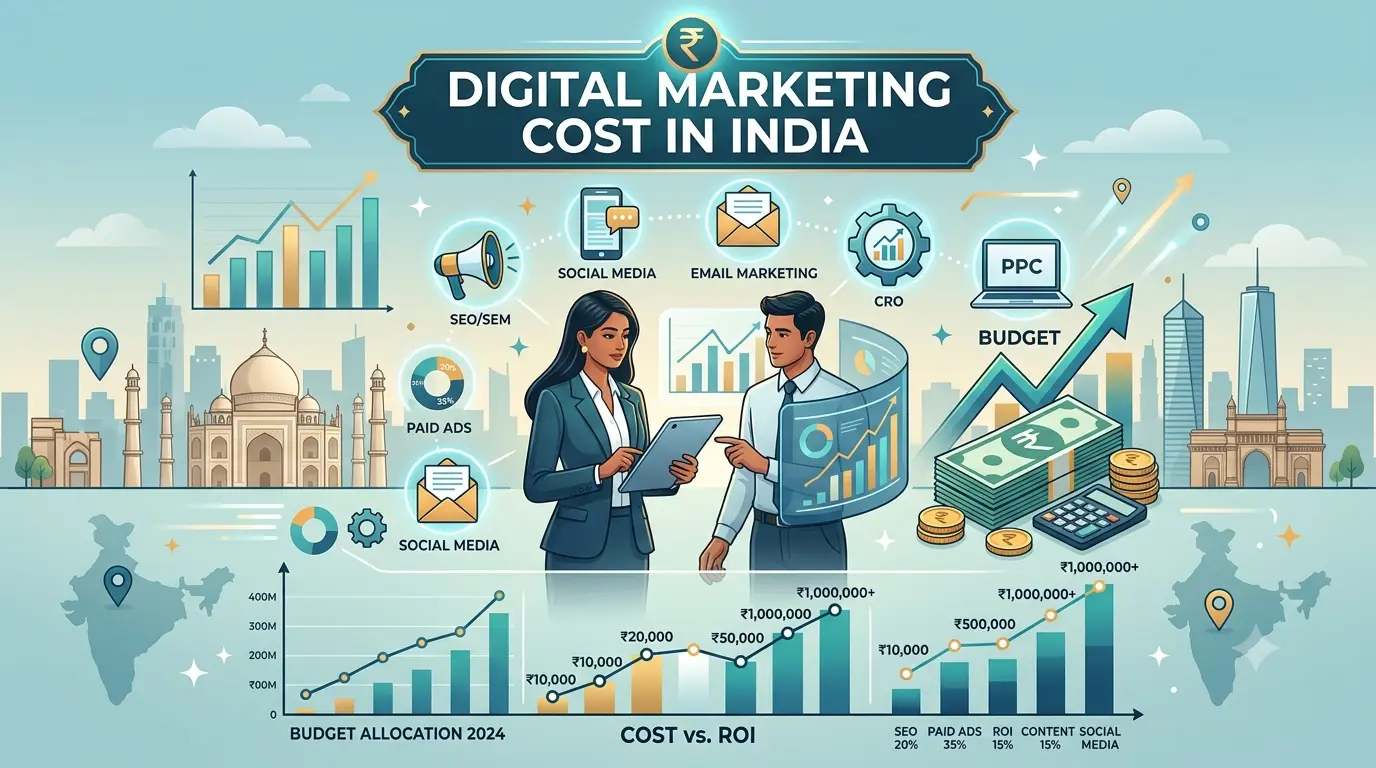
Common monthly planning ranges
These ranges are indicative and exclude advertising media spend unless stated otherwise.
- Focused local presence: around ₹15,000–₹30,000 per month for a limited service scope.
- Growth programme: around ₹30,000–₹75,000 per month for multiple connected channels and regular content.
- Competitive multi-channel work: ₹75,000 per month and above when campaigns, SEO, creative production and conversion improvement run together.
Production-heavy work, multiple brands, video, large catalogues and custom reporting increase the time required.
What are you actually paying for?
Strategy and research
Audience, competitors, offers, search behaviour and the customer journey shape the plan. Without research, a team may produce consistent activity that reaches the wrong people.
Creative and content production
Articles, landing pages, ad copy, social designs and video require different skills. Confirm how many items are included and who approves them.
Campaign and website work
SEO implementation, Google Ads management, tracking and conversion improvements require technical access and ongoing analysis—not only monthly posting.
Measurement and communication
Reports should show what changed, what the result means and what will happen next. Decide who owns approvals, lead follow-up and internal coordination.
How to allocate the budget
A new local business may prioritize Google Business Profile, a strong website and one lead channel. A business with proven demand may combine SEO and Google Ads. A visually led consumer brand may put more into social creative and Meta Ads. The mix should follow customer behaviour, not a standard percentage chart.
Questions to ask before selecting a package
- Which business goal and audience is the plan built around?
- Which deliverables are completed every month?
- Is ad spend separate from the agency fee?
- Who owns the ad accounts, analytics and creative files?
- How are calls, forms and sales opportunities tracked?
- What is excluded and what would cost extra?
Digital marketing package FAQs
Select a question to view the answer.
Should a small business use every digital channel?+
No. It is normally better to execute a few channels well, prove the journey and add another channel when the team can support it.
How long should an agency engagement last?+
Paid campaign testing may show signals quickly, while SEO and content need more time. Agree on review milestones, notice terms and access ownership before work begins.
What is the most important dashboard metric?+
No single metric fits every business. Qualified enquiries, customer acquisition cost and revenue opportunity usually matter more than impressions or follower growth alone.
A connected plan usually performs better
An advertisement can create attention, but the website must convert it. SEO can generate visibility, but content must answer the search. Reporting is only useful when the team acts on it. Rankupar’s digital marketing service connects these parts around measurable outcomes for businesses in Mumbai, Thane and across India.