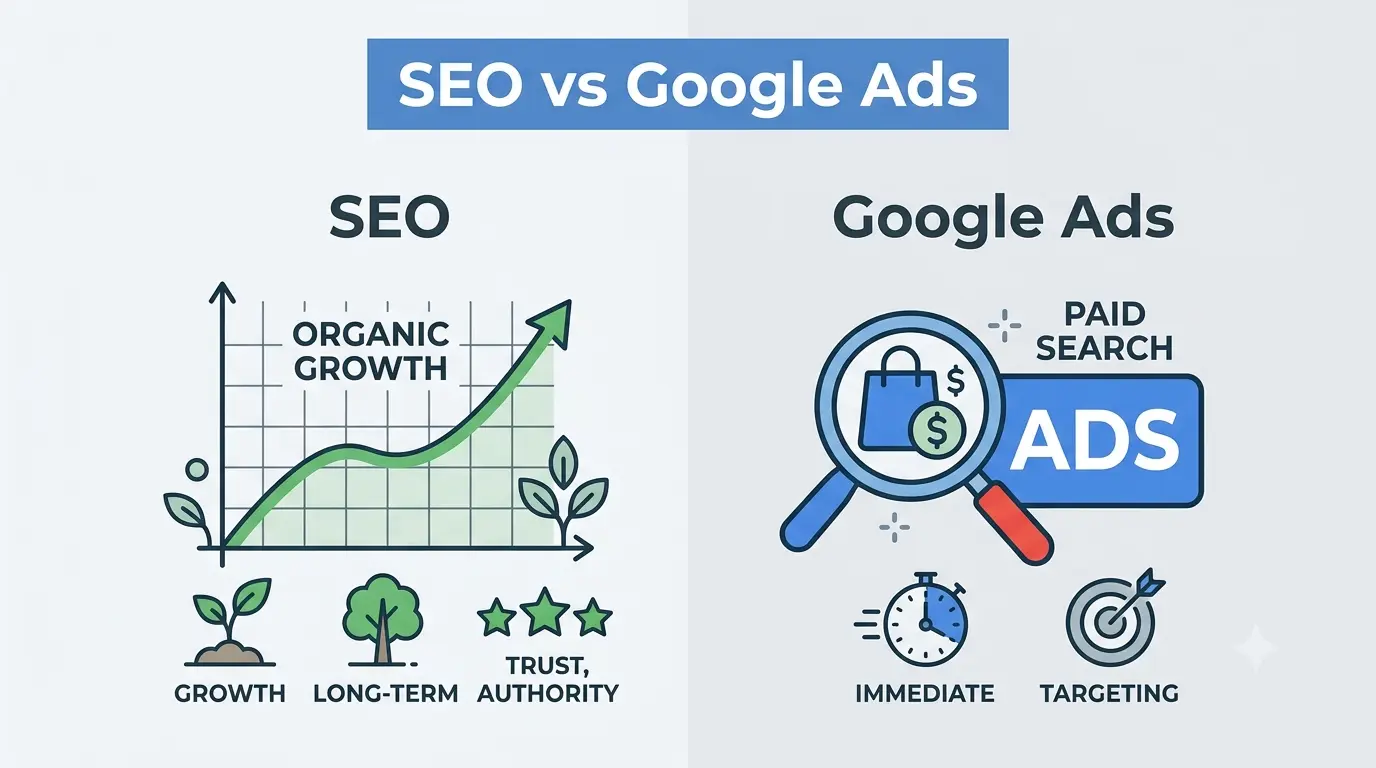
SEO and Google Ads both connect a business with people using search engines, but they work differently. SEO improves organic visibility over time. Google Ads buys placement for selected searches and can begin generating traffic as soon as a suitable campaign is approved.
SEO: the long-term visibility channel
SEO improves the website’s technical quality, relevance and authority. It is useful when customers repeatedly search for the service and the business can invest in content and website improvement over several months.
Advantages of SEO
- Organic pages can keep attracting visits after the initial work.
- Useful content builds authority across many related searches.
- Technical improvements can strengthen the complete website.
Limitations of SEO
- Results are not immediate and fixed rankings cannot be guaranteed.
- Competitive topics require consistent content and authority work.
- Search algorithms and result layouts change.
Google Ads: the immediate demand channel
Google Ads can place an offer in front of people searching now. It is useful for testing services, supporting a launch, filling a short-term enquiry gap or targeting valuable commercial searches.
Advantages of Google Ads
- Campaigns can launch quickly.
- Location, schedule, budget and keyword controls are available.
- Ads and landing pages can be tested with measurable conversions.
Limitations of Google Ads
- Traffic normally stops when the media budget stops.
- Poor targeting or tracking can waste spend.
- Competitive clicks may be expensive.
Which should your business choose?
Choose Google Ads when speed, controlled testing or immediate demand matters. Choose SEO when the business can invest in durable search visibility and helpful content. Use both when paid campaigns can generate near-term enquiries while SEO builds a stronger long-term acquisition asset.
SEO vs Google Ads FAQs
Select a question to view the answer.
Can a new business use SEO and Google Ads together?+
Yes. Ads can test messages and produce near-term visibility while SEO develops the website and content for sustainable organic discovery.
Do people click organic results more than ads?+
Click behaviour changes by query and result layout. Instead of relying on a universal percentage, measure the qualified actions each channel produces for your market.
Which channel needs the larger budget?+
That depends on click competition, website condition, content resources and timeline. Build a forecast for both channels using the same customer-value assumptions.
Use the same measurement foundation
Both channels need clear landing pages, conversion tracking and prompt lead follow-up. Compare qualified enquiries and sales opportunities, not just clicks. Search-term data from paid campaigns can inform content research, while organic insights can identify valuable advertising themes.
A simple decision checklist
- How soon do you need enquiries?
- Is there proven search demand for the service?
- Can the website explain and convert the offer?
- Can you fund advertising and ongoing optimization?
- Can the team publish and improve content consistently?
Compare Rankupar’s SEO services and Google Ads management, or ask for a channel recommendation based on your goal, market and timeline.